Amazon Basics Wire Stripper: Buy It for the Stripping, Not the Crimping

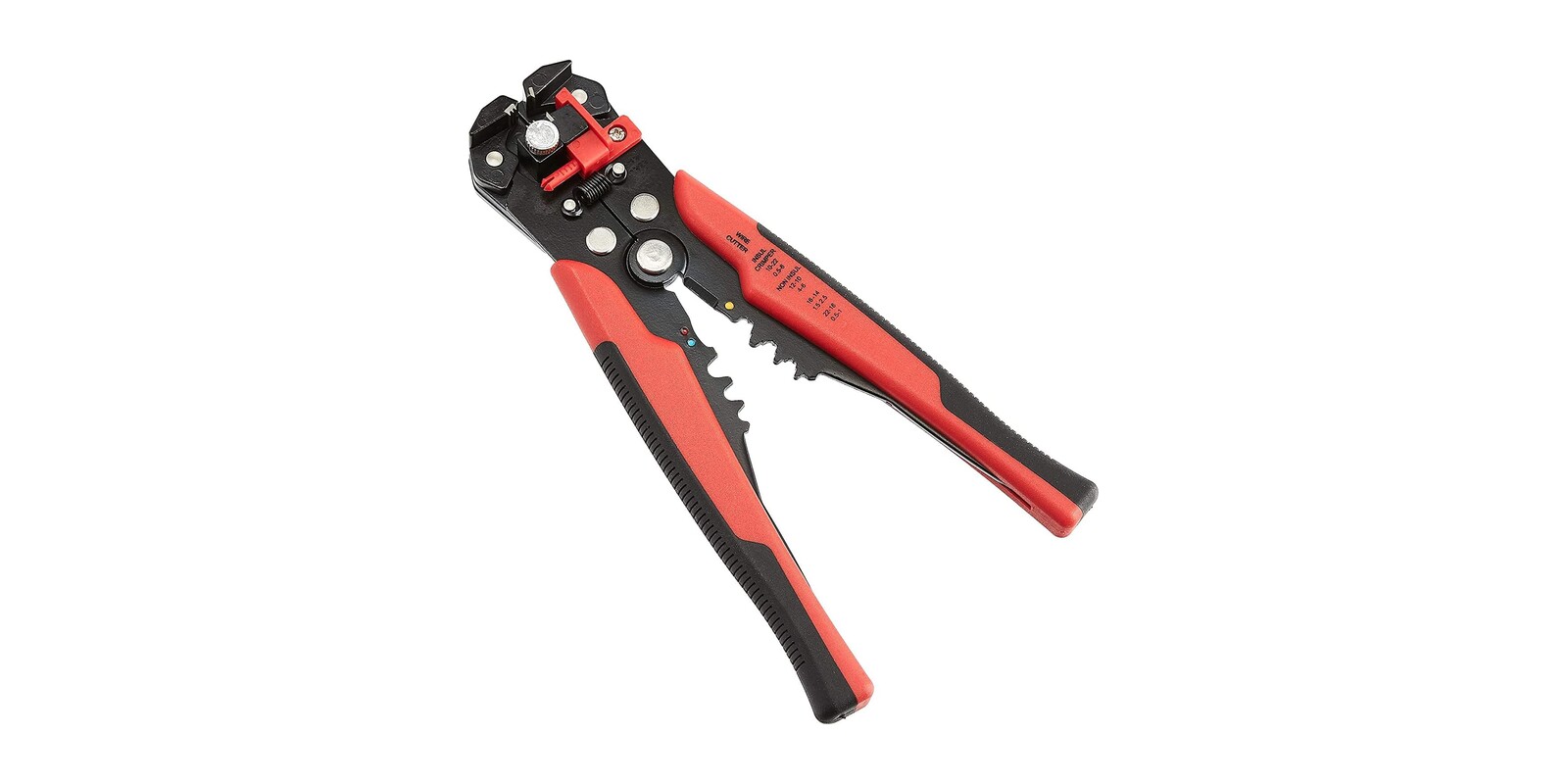
There's a category of small job around the house that stays undone for months because the fiddly part feels bigger than the job itself. The wiring is easy. The prep is what stops you:
- The thrift-store lamp with the cracked, brittle cord that just needs a fresh one run up through the base.
- The trailer light connector that corroded off, leaving four wires that all need clean ends and new crimps.
- The hobby bench project (RC trucks, speaker runs, doorbell transformers) with a pile of skinny wires waiting to be stripped.
Every one of those starts the same way: get the insulation off without nicking the copper underneath. If you've been doing that with a razor blade, a pocket knife, or your teeth (we won't judge, your dentist might), a self-adjusting stripper feels like cheating the first time you squeeze one. The Amazon Basics Self-Adjusting Wire Stripper and Crimping Tool is the entry ticket to that feeling. And it comes with a catch you should know about before you buy, because one half of this tool is clearly better than the other.
What You're Actually Getting
One tool, three jobs. The head is a self-adjusting stripper: lay the wire in, squeeze, and the jaws grip the wire, figure out the insulation thickness on their own, and pull the jacket off in one motion. It handles 10 to 24 AWG, which covers lamp cord, automotive wiring, thermostat wire, and most of what a house or garage will throw at you. Behind the jaws sits a red adjustable stopper that sets exactly how much insulation comes off, so every strip on a batch of wires comes out the same length.
Down in the handles there's a crimper for insulated and non-insulated terminals from 10 to 22 AWG, plus 7 to 9mm ignition terminals. The body is corrosion-resistant alloy steel with grippy handles, and it has a decent heft to it. One reviewer pushed it past spec and stripped 28 gauge wire cleanly, well below the rated 24. Don't count on that, but it says something about how well the jaws grip when they're behaving.
The Lamp Rewire, Step by Step
Take that thrift-store lamp. Here's the whole job with this tool in hand:
- Unplug the lamp, cut the old cord near the base, and pull it out. Cut your new cord to length with the built-in cutter.
- Split the last couple of inches of the cord so you have two separate conductors to work with.
- Set the red stopper to the strip length your socket terminals need. This is the part worth doing on a scrap piece first.
- Lay the first wire flat in the jaws and squeeze. The insulation comes off in one clean pull, no scoring, no rolling the wire under a blade.
- Do the second conductor. Because the stopper hasn't moved, you get an identical strip without measuring anything.
- Feed the cord up through the lamp, connect to the socket, done. If your project ends in a crimp connector instead of a screw terminal, the crimper is right there in the handles. More on that in a minute.
A word on step 3: expect a few minutes of fiddling out of the box. One reviewer noted the tool frayed the wire slightly until they got it dialed in. Once it's adjusted for the wire you're working with, it repeats all day.
💡 Warm Corners Tip
Two tricks straight from long-term owners. If a scrap of insulation gets stuck in the mechanism and the jaws stop cycling, don't pry at it. Tip the tool over and the loose piece falls out. And if the red stopper gets in your way on longer strips, unlock it and slide it all the way out rather than fighting it.
The Crimper Is the Weak Half
This tool rates 4.2 stars, and the crimper is most of the reason it isn't higher. We're not going to soften this: if crimping is the main reason you're buying it, don't.
"Good auto stripper, less-good crimp tool."
That's the title of a three-star review from someone who bought this specifically to replace a cheap crimper, and ended up shopping for yet another crimper afterwards. Their first few crimps came out fine but awkward. Later ones were, in their words, painful, and still not proper after multiple tries. A one-star reviewer went further: on their unit the handles folded and slid past each other instead of closing the crimp squarely.
The stripping side has its own asterisk, though a smaller one. Some owners report the jaws slipping on certain wires, to the point of holding the gripping jaw closed with their free hand to force a bite. And that red adjustable stopper is plastic on an otherwise steel tool, which a few people flag as the part they expect to give out first.
If you crimp connectors regularly and they need to be right the first time (automotive work, anything that vibrates), budget for a dedicated ratcheting crimper and treat the one built into these handles as a backup for occasional, non-critical crimps.
Where It Lands
| Good | Not so good |
|
|
Is This the Right Wire Stripper for You?
You'll love it if you are...
- 🔧 A DIYer who strips wire a few times a year (outlets, lamps, thermostats) and wants the job done without a knife and swearing
- 🚗 Someone doing occasional 12V work on cars, trailers, or mowers, where fast repeatable strips matter more than production-grade crimps
- 🛠️ A hobbyist wiring RC vehicles or bench projects, where the fine-wire performance genuinely surprises people
- 🎁 Stocking a first toolbox for someone who owns zero electrical tools
Skip it if you need...
- A crimper you can trust. That half of the tool is the documented weak point, and a dedicated ratcheting crimper isn't optional if crimps are your main job
- A tool for daily professional use. The slipping-jaw complaints suggest quality varies unit to unit, and that lottery is fine for a home drawer, not for a work van
- Guaranteed performance below 24 AWG. Thinner wire has worked for some owners, but it's outside spec
Review Base at a Glance
4.2 stars across 4,693 ratings, and for once the number tells the story accurately. The praise clusters hard on the stripping head: fast, clean, satisfying, works past its rated range. The low ratings cluster just as hard on the crimper and on units where the jaws slip. So read the 4.2 as an average of two different tools sharing one handle. Bought as a stripper with a backup crimper attached, it's better than its rating. Bought as a crimper, believe the 4.2 and keep walking.
As an Amazon Associate I earn from qualifying purchases. This comes at no extra cost to you.
You should also read:
JLab JBuds Open Wireless Review: Honest Answers Before You Buy Open-Ear
You're running along a road with cars on it, and you want music without going deaf to the truck coming up behind you. Or you work from home and your kid keeps wandering in, and pretending you can't hear them through noise-cancelling earbuds stopped being…
Continue reading...